

Chiropractic for TMJ – Is It the Jaw-some Solution You’ve Been Missing?
That Nagging Jaw Pain Might Be TMJ
Can chiropractic help TMJ? Yes, research shows that chiropractic care can effectively treat temporomandibular joint (TMJ) disorders. Studies reveal that 100% of patients receiving chiropractic treatment reported improvement in TMJ pain, with 90% experiencing reduced jaw clicking and 80% seeing improvement in jaw locking.
Quick Answer: How Chiropractic Helps TMJ
- Pain Relief: All patients in studies reported pain improvement
- Improved Function: 90% reduction in jaw clicking, 80% in jaw locking
- Fast Results: Average treatment duration of 2.5 weeks with 4.5 sessions
- Holistic Approach: Addresses spine-jaw connection and root causes
- Non-Invasive: Safe alternative to surgery or medication
- Collaborative Care: Works well with dental and other treatments
If you’re dealing with jaw pain, clicking sounds, or frequent headaches, you might have temporomandibular joint dysfunction (TMD). This condition affects the joint connecting your jaw to your skull and can impact daily life. The good news is that chiropractic care offers a proven, non-invasive solution. By addressing the root cause—the connection between your spine, neck, and jaw—chiropractors can restore proper function and provide lasting relief.
I’m Dr. Mitch Stanlick, and since 2004, I’ve helped patients in Murfreesboro find relief from TMJ pain through comprehensive chiropractic care. My experience confirms that when patients ask “can chiropractic help TMJ,” the answer is yes, especially when we address the underlying spinal and muscular imbalances.

Can chiropractic help TMJ terms to learn:
Understanding TMJ: Key Symptoms and Common Causes
Have you ever experienced an unsettling “pop” when you yawn or a persistent ache near your ear? You’re not alone. Temporomandibular Joint Disorder affects approximately 12% of the U.S. population at any given time, and women are four times more likely to develop it than men.

TMJ is a collection of disorders affecting the jaw and skull connection, disrupting daily activities like eating and speaking. A key factor many overlook is the link between neck posture and jaw alignment. Poor posture, such as a forward head position, creates a chain reaction that can trigger or worsen TMJ symptoms.
What are the Telltale Signs of a TMJ Disorder?
TMJ symptoms can be constant or intermittent and often extend beyond the jaw itself.
- Pain or tenderness in the jaw, cheek, teeth, or ear is a primary red flag, often worsening with chewing or speaking.
- Aching facial pain can radiate to the neck and shoulders. Many patients initially suspect a neck problem when the jaw is the true culprit.
- Jaw clicking and popping are common complaints. While some sounds are normal, persistent or painful clicking, or a grating sensation, warrants attention.
- Difficulty chewing or a feeling that your teeth don’t fit together properly can make mealtimes frustrating.
- Locking of the joint, where the jaw gets stuck open or closed, can be alarming and limit mouth movement.
Beyond these, TMJ can cause headaches, earaches, ringing in the ears, and dizziness. The chronic pain can also lead to stress and anxiety, creating a cycle where tension worsens symptoms.
What Triggers TMJ Problems?
Understanding the cause of TMJ is key to effective treatment. Several common triggers have been identified in our Murfreesboro practice.
- Jaw injury from trauma or even extended dental procedures can strain the joint.
- Bruxism (teeth grinding or clenching), often linked to stress, places enormous pressure on the TMJ and surrounding muscles.
- Arthritis and other degenerative joint diseases can cause inflammation and pain in the jaw.
- Misalignment of the cervical spine is a critical factor. When upper neck vertebrae are misaligned, it creates nerve interference and muscle tension that directly affects jaw function. This is where the question can chiropractic help TMJ becomes highly relevant.
- Poor posture, common in our digital age, alters jaw mechanics and contributes to both neck and jaw problems.
- Muscle tension in the face, neck, and shoulders can radiate to the jaw.
- Internal joint problems, like a displaced disc, can cause clicking, locking, and pain.
At Stanlick Chiropractic, we investigate all possible causes to create a comprehensive treatment plan. For more information, the Scientific research on TMJ symptoms and causes offers valuable insights.
How Can Chiropractic Help TMJ Pain and Dysfunction?
While many associate chiropractors with back and neck pain, our expertise covers the entire musculoskeletal system. Your body is an interconnected system, which is why chiropractic care is so effective for TMJ. The jaw is linked to the skull, neck, and upper back through a complex network of muscles, nerves, and joints. A problem in one area can create a domino effect.

At Stanlick Chiropractic, we don’t just chase symptoms; we find the root cause of your TMJ pain. A pinched nerve in your neck or muscle tension from your shoulders could be the real culprit. By addressing these underlying issues, we restore proper function and provide lasting relief.
The Chiropractic Approach to TMJ
Our approach focuses on fixing the problem naturally.
- The spine-jaw connection: The craniocervical-mandibular complex (skull, neck, and jaw) relies on proper alignment. We correct misalignments in the upper cervical spine that strain the jaw.
- Reducing muscle tension: TMJ often involves tight muscles in the jaw and neck. We use specific techniques to help these muscles relax.
- Improving mobility: We work to restore smooth, pain-free movement to the TMJ, so you can eat and speak comfortably.
- Correcting subluxations: By gently correcting spinal misalignments (subluxations), we can reduce nerve interference, muscle spasms, and pain.
- Whole-body wellness: We look at your posture, habits, and stress levels, as they all play a role in TMJ. Our goal is to improve your overall health.
What does a chiropractic evaluation for TMJ involve?
Your first visit to our Murfreesboro office involves a thorough evaluation to create a personalized plan.
- Health History Review: We discuss your symptoms, their onset, and relevant habits like teeth grinding.
- Physical Examination: This includes a postural assessment and range of motion tests to check jaw movement, noting any clicking or pain.
- Palpation: We gently feel your jaw and neck muscles to identify tension and trigger points.
- Spinal Examination: We carefully check your cervical and thoracic spine for misalignments that could be affecting your jaw function. This spine-jaw connection is often the missing piece of the puzzle.
This comprehensive evaluation gives us the complete picture needed to create an effective, personalized treatment plan.
Chiropractic Techniques and Treatments for TMJ
Once we’ve identified the cause of your TMJ, we use a variety of gentle, non-invasive techniques to restore proper jaw function without medication or surgery. Can chiropractic help TMJ with these methods? Absolutely. Our treatment looks at the whole system, including your neck, spine, and muscles, not just the jaw itself.
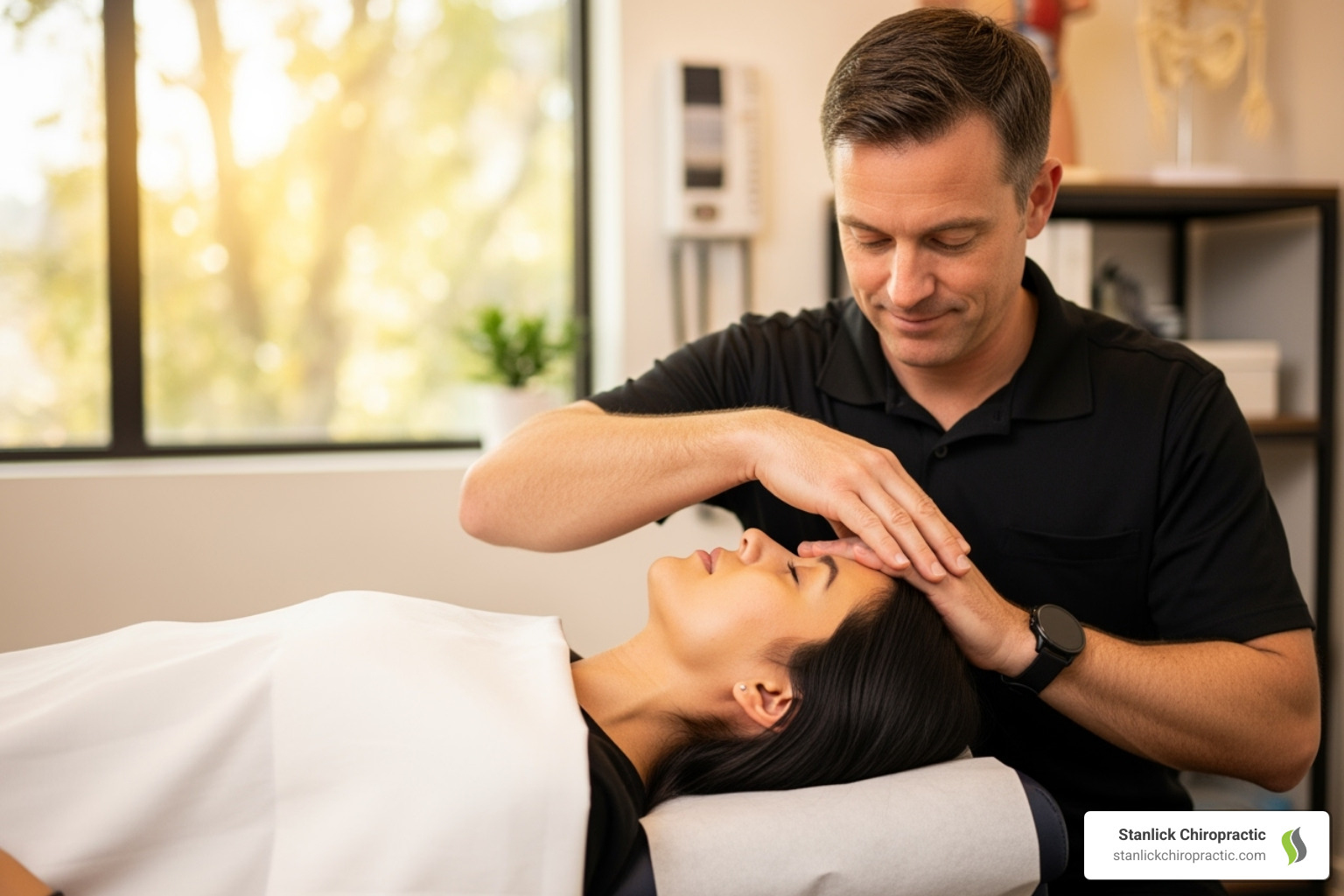
Specific Chiropractic Adjustments
Our adjustments are precise and gentle, with no aggressive manipulation.
- Cervical Spine Adjustments: Proper alignment of the neck, especially the upper cervical vertebrae (atlas C1 and axis C2), is foundational to our TMJ treatment as it can relieve nerve interference and muscle tension affecting the jaw.
- Gentle Joint Mobilization: We can adjust the temporomandibular joint itself. Using precise manual techniques, we restore natural movement to the jaw, often focusing on the restricted side.
- Activator Method: For a gentler approach, we use a specialized instrument that delivers a controlled impulse to specific points. It’s highly effective for the sensitive muscles around the jaw and neck.
Can chiropractic help TMJ with soft tissue techniques?
Addressing the muscles around the jaw and neck is vital for lasting relief. We use several techniques to release tension:
- Trigger Point Therapy: We apply targeted pressure to painful “knots” in your muscles that refer pain to your jaw, head, and neck.
- Myofascial Release: We use sustained, gentle pressure to release restrictions in the fascia (connective tissue) in your jaw, face, and neck.
- Targeted Muscle Work: We use specific techniques to release tension in key chewing muscles like the masseter and the temporalis (on the sides of your head), which can provide immediate pain relief and reduce headaches.
- Intra-oral Techniques: When necessary, we perform gentle work inside your mouth to reach muscles that are crucial for jaw movement but difficult to access externally.
Complementary Therapies and At-Home Care
We empower you with tools to continue healing at home.
- K-Laser Therapy: This advanced therapy uses specific light wavelengths to penetrate tissues, reducing inflammation, promoting cellular repair, and alleviating pain. It’s a painless way to accelerate healing.
- Corrective Exercises: We provide exercises to strengthen weak muscles, stretch tight ones, and improve jaw-neck coordination for long-term relief.
- Postural Retraining: We teach you how to maintain better posture to reduce strain on your jaw.
- Lifestyle Recommendations: We may suggest stress management techniques, dietary changes, and the use of heat or cold therapy at home to support your recovery.
The Evidence: Benefits and Timelines for TMJ Chiropractic Care
When considering treatment for jaw pain, you need to know it works. The research supporting chiropractic care for TMJ is compelling and aligns with the positive results we see daily at Stanlick Chiropractic.
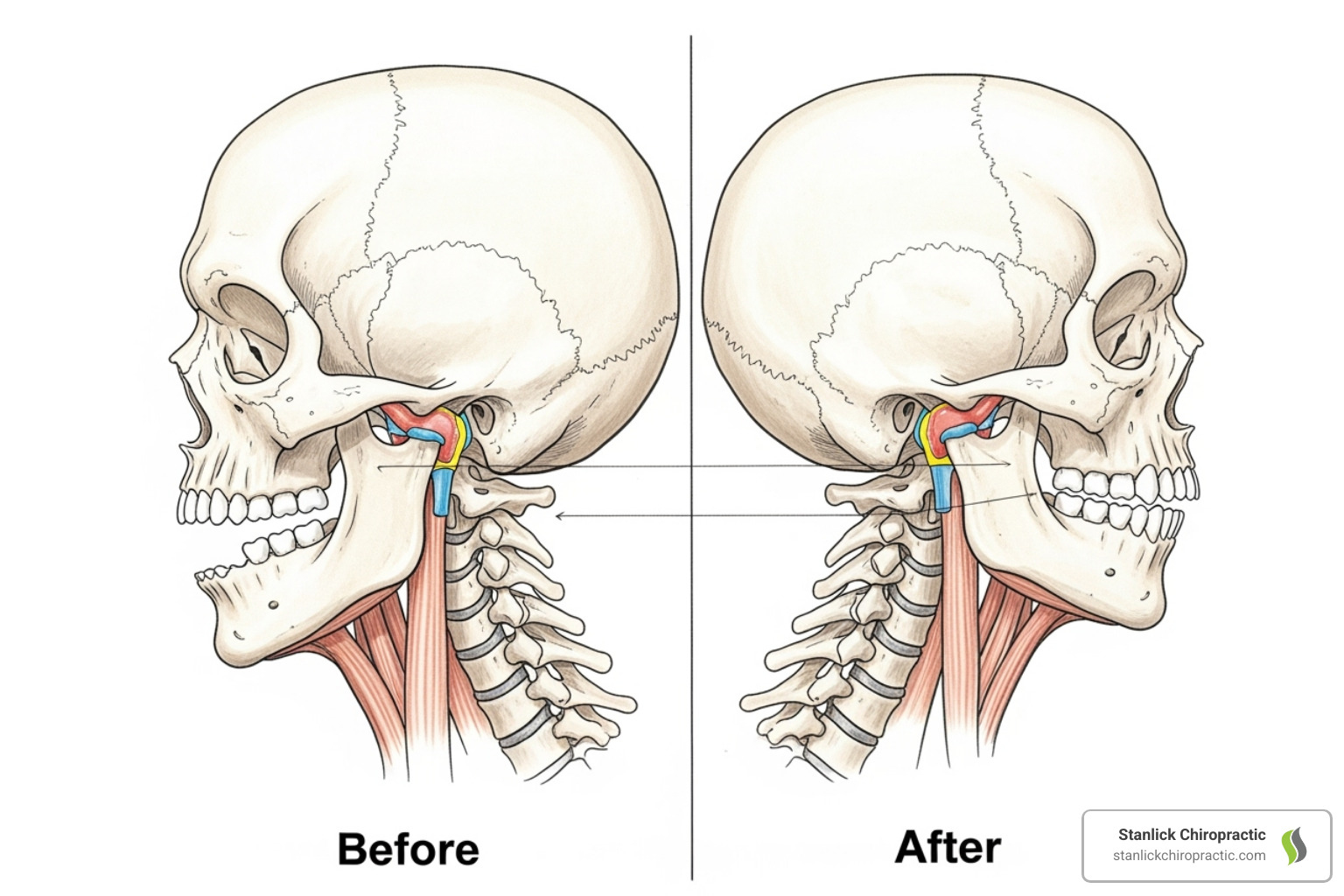
A comprehensive study on chiropractic treatment for TMJ found that 100% of patients reported improvement in their pain levels. The benefits didn’t stop there: 90% of patients experienced improvement in jaw clicking, and 80% saw their jaw locking issues resolve. This research, which you can read more about in A case series on chiropractic TMJ treatment, shows that chiropractic care restores proper function, not just masks symptoms.
What are the benefits of chiropractic care if I’m wondering can chiropractic help TMJ?
The comprehensive approach of chiropractic care for TMJ leads to a wide range of improvements.
- Pain Reduction: Patients in studies saw pain scores drop dramatically, from an average of 8.3/10 down to just 1.4.
- Improved Jaw Function: The return of smooth, natural jaw movement eliminates embarrassing clicking and painful locking.
- Increased Mouth Opening: Regaining the ability to open your mouth fully allows you to eat, speak, and laugh without restriction.
- Reduced Inflammation and Tension: Addressing the root cause often resolves related issues like headaches, ear pain, and neck and shoulder tension.
- Non-Surgical and Drug-Free: Our natural approach works with your body’s healing ability, avoiding the risks and side effects of medication or surgery.
How Long Until I See Results?
Chiropractic care for TMJ often works faster than people expect. Research shows the average patient finds relief within 2.5 weeks, requiring about 4.5 treatment sessions.
Of course, timelines vary. Acute conditions may resolve faster than chronic issues. Your progress also depends on patient compliance—following through with exercises and lifestyle recommendations is key to a speedy recovery. We’ll start with more frequent visits and space them out as you improve, with the goal of getting you better as quickly as possible and helping you stay that way.
Frequently Asked Questions about Chiropractic and TMJ
We know you might have more questions. Here are some common inquiries we receive at Stanlick Chiropractic:
Can chiropractic care for TMJ be combined with other treatments?
Yes, absolutely. We believe in a collaborative approach for complex conditions like TMJ, and combining treatments often yields better results. We frequently coordinate care with dentists, especially regarding mouthguards or splints for bite issues. Combining our structural work with dental care can lead to a more complete resolution. We also support the use of physical therapy and stress management techniques like mindfulness or yoga to address all facets of your condition. You can learn more about this team approach in A collaborative approach between chiropractic and dentistry.
When should I consider seeing a chiropractor if I think chiropractic can help TMJ?
You should consider a consultation if you experience any of the following:
- Persistent jaw pain that doesn’t respond to home remedies.
- Chronic headaches or earaches, especially if they seem related to jaw tension.
- Limited jaw movement, stiffness, or difficulty opening your mouth wide.
- Painful clicking, popping, or locking of the jaw.
- Failure of other conservative treatments to provide relief.
Early intervention can prevent TMJ from becoming a chronic, debilitating condition. Don’t suffer in silence.
Is chiropractic treatment for TMJ painful?
This is a common concern. We use gentle techniques and low-force adjustments specifically designed for the sensitive jaw and neck areas. Our focus is always on patient comfort. You might feel mild soreness after the first session, similar to post-workout muscle ache, but the treatment itself is not painful. Communication is key; we will always adjust our approach to ensure you are comfortable. Your safety and well-being are our top priorities at our Murfreesboro practice.
Conclusion: Take the First Step Towards a Pain-Free Jaw
If you’ve been asking yourself, “can chiropractic help TMJ,” we hope this guide has shown that the answer is a clear and evidence-backed “yes!”
The research is compelling: 100% of patients reported pain improvement, with significant reductions in jaw clicking and locking, often within just a few weeks of care. These aren’t just numbers; they represent real people finding relief from a debilitating condition.
Chiropractic care is so effective because of its holistic approach. We look beyond the jaw to the intricate connections with your neck and spine. By addressing the root cause—be it spinal misalignment, muscle tension, or poor posture—we provide lasting relief, not just a temporary fix.
Our safe and effective treatment works with your body’s natural healing ability, avoiding invasive procedures or medications. This journey to whole-body wellness often resolves related issues like headaches and neck pain.
At Stanlick Chiropractic in Murfreesboro, TN, we create personalized treatment plans custom to your specific needs. Don’t let TMJ limit your ability to eat, speak, or enjoy life any longer.
For a personalized assessment in Murfreesboro, TN, Stanlick Chiropractic offers custom treatment plans to address the root cause of your TMJ pain.
Ready to take the first step towards a jaw-some solution and a pain-free future?


