

Stop the Slip with Local Herniated Disc Experts
When Back Pain Stops Your Life: Finding Herniated Disc Treatment Near Me
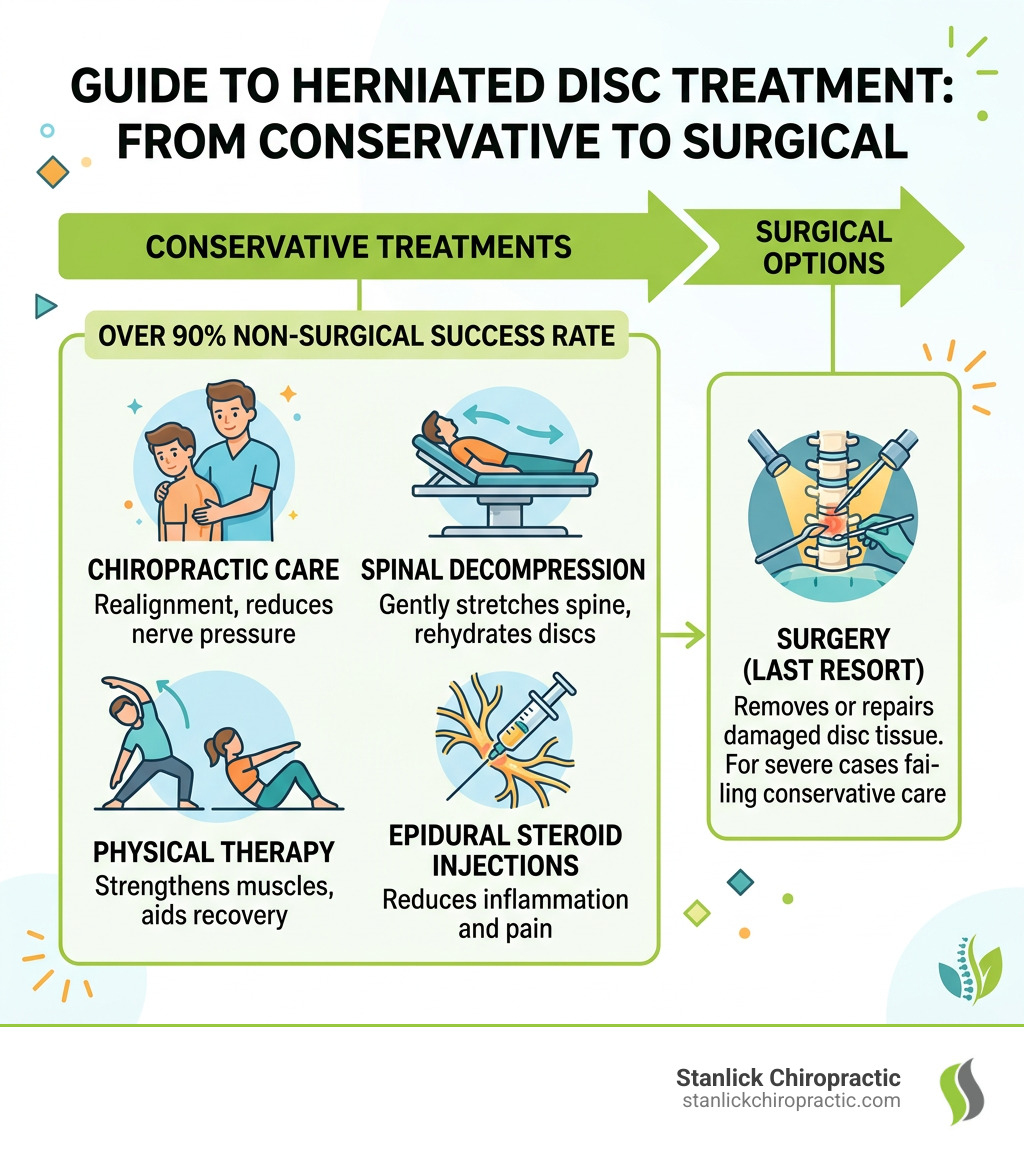
If you’re searching for herniated disc treatment near me, here are the most effective options to start with:
| Treatment Type | What It Does | Best For |
|---|---|---|
| Chiropractic care | Realigns spine, reduces nerve pressure | First-line relief |
| Spinal decompression | Gently stretches spine to rehydrate discs | Chronic or severe disc pain |
| Physical therapy | Strengthens muscles supporting the spine | Recovery and prevention |
| Epidural steroid injections | Reduces inflammation around nerves | Short-term pain relief |
| Surgery (last resort) | Removes or repairs damaged disc tissue | Failed conservative care after 6-12 weeks |
Good news: over 90% of herniated disc cases can be treated without surgery.
A herniated disc is one of the most common causes of back and neck pain — and it can stop you in your tracks. Whether it’s a dull ache after a long day at your desk or a sharp, shooting pain down your leg, the disruption to your daily life is real.
The disc between your vertebrae acts like a shock absorber. When its soft inner core pushes through the outer layer, it can press on nearby nerves. That’s what triggers the pain, numbness, and weakness so many people experience.
The encouraging part? Most people recover without surgery. Conservative care — started early and done right — makes a significant difference for the vast majority of patients.
I’m Dr. Mitch Stanlick, chiropractor and founder of Stanlick Chiropractic in Murfreesboro, Tennessee, with over two decades of experience helping patients find effective herniated disc treatment near me through chiropractic care, spinal decompression, and personalized rehabilitation. In the sections below, I’ll walk you through everything you need to know to make a confident, informed decision about your care.
Understanding the “Slipped” Disc: Causes and Symptoms
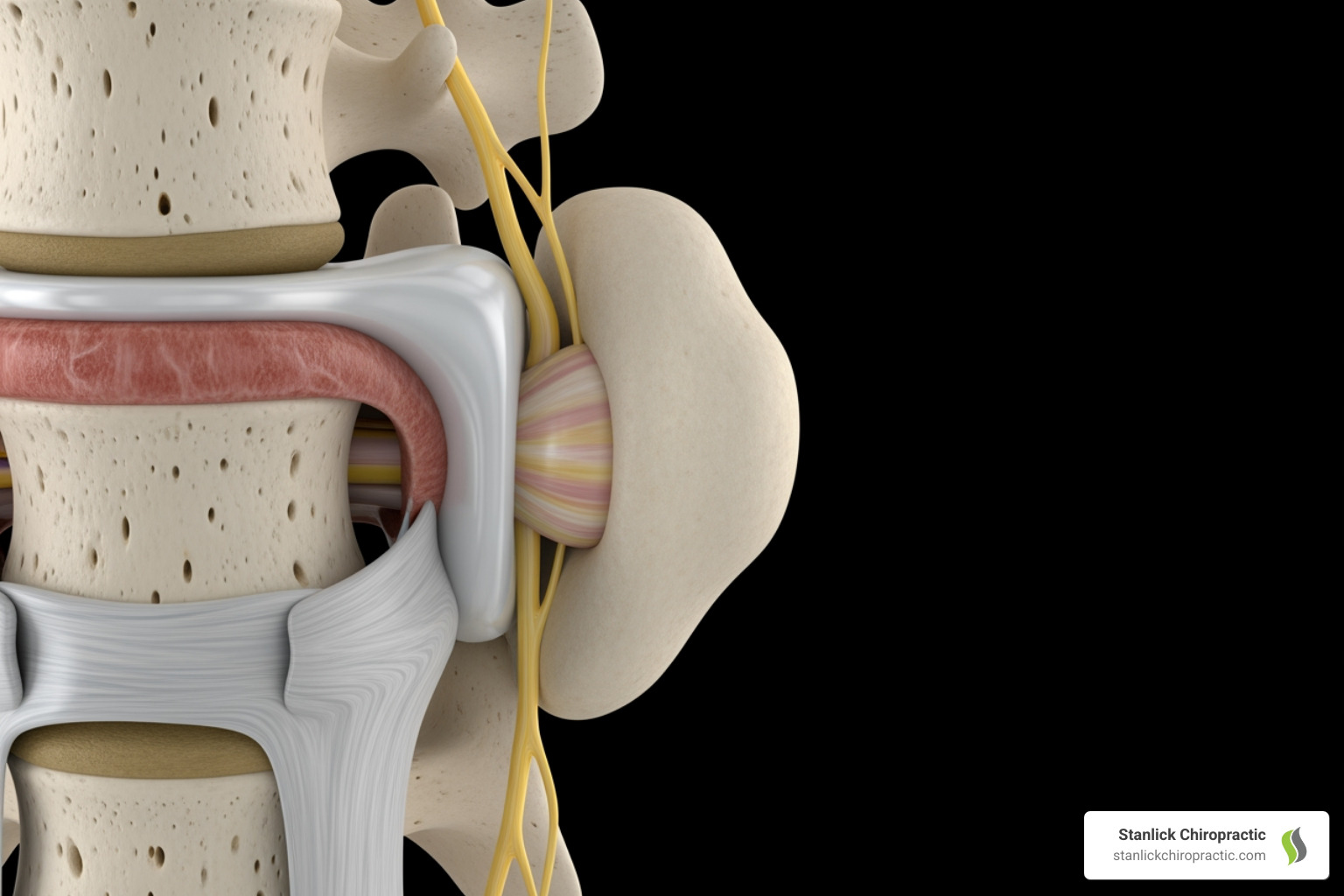
To understand why your back or neck hurts, we first have to look at the anatomy of your spine. Think of your spinal discs as little jelly donuts sitting between your vertebrae. They have a tough, rubbery exterior called the annulus fibrosus and a soft, jelly-like center known as the nucleus pulposus.
A herniated disc (often called a “slipped” or “ruptured” disc) occurs when a crack or tear in the outer layer allows that inner jelly to push out. This can cause problems in two ways: mechanical compression (the bulge physically pinching a nerve) and chemical irritation (the “jelly” contains proteins that cause intense inflammation when they touch a nerve).
What Causes the “Slip”?
In our Murfreesboro clinics, we see herniated discs caused by a variety of factors:
- Degenerative Changes: As we age, our discs naturally lose water content, making them less flexible and more prone to tearing even with minor strain.
- Sudden Trauma: A fall, a car accident, or an abrupt twisting motion can force the nucleus through the annulus.
- Improper Lifting: Using your back muscles instead of your legs to lift heavy objects is a classic recipe for a disc injury.
- Lifestyle Factors: Smoking (which inhibits blood flow to the discs), obesity, and prolonged sitting (like long commutes through Tennessee) all increase the pressure on your spinal column.
Common Symptoms
The symptoms you feel depend entirely on where the herniation is located. If it’s in your lower back (lumbar spine), you might experience sciatica—a sharp, shooting pain that travels from your buttocks down one leg. If it’s in your neck (cervical spine), the pain usually radiates into your shoulders or arms.
Common red flags include:
- Muscle Weakness: Nerves serve as the “power lines” to your muscles; if they are compressed, your muscles may stumble or fail.
- Numbness and Tingling: That “pins and needles” sensation in your hands or feet.
- Burning Pain: A localized or radiating heat that feels like an electric shock.
Ongoing Scientific research on musculoskeletal health continues to highlight how crucial early intervention is to prevent these symptoms from becoming chronic.
Finding the Best Herniated Disc Treatment Near Me
When you start looking for herniated disc treatment near me, the first step shouldn’t be a surgery schedule—it should be a comprehensive diagnosis. At Stanlick Chiropractic, we believe you can’t fix what you haven’t accurately identified.
The Diagnostic Process
We use a multi-faceted approach to ensure we are treating the root cause of your pain:
- Comprehensive Physical Examination: We check your range of motion, posture, and spinal alignment.
- Neurological Testing: We test your reflexes, muscle strength, and sensory perception to see exactly which nerve root is being affected.
- Imaging Review: While we start with a physical exam, we often review MRI or CT scans. An MRI is the gold standard for confirming the location and severity of a herniation because it shows the soft tissues (the discs) that X-rays miss.
- Nerve Conduction Studies: In complex cases, these tests help us pinpoint exactly where a nerve is being pinched and how much damage has occurred.
Our team values orthopedic training and stays updated on the latest diagnostic protocols to ensure our Murfreesboro neighbors receive world-class care right here at home.
| Diagnostic Tool | Purpose | What it Reveals |
|---|---|---|
| Physical Exam | Baseline Assessment | Flexibility and pain triggers |
| Neurological Test | Nerve Function | Reflexes and muscle strength |
| MRI Scan | Structural Detail | Disc position and nerve impingement |
| X-Ray | Bone Alignment | Rules out fractures or tumors |
Non-Surgical Interventions and Advanced Therapies
The statistics are in your favor: more than 90% of disc herniations can be successfully managed without ever going under the knife. At Stanlick Chiropractic, our goal is to provide herniated disc treatment that is non-invasive, drug-free, and affordable.
Conservative care is the recommended “first-line” intervention for back problems. By focusing on the body’s natural ability to heal, we can often resolve symptoms within a few weeks. Our approach combines traditional chiropractic adjustments with modern technology.
Effective Spinal Decompression and Herniated Disc Treatment Near Me
One of our most successful tools for disc injuries is Spinal Decompression. Unlike traditional traction, this is a computer-controlled “vertebral axial decompression” that gently stretches the spine.
How does it work? It creates a “negative pressure” (a vacuum effect) inside the disc. This vacuum helps pull the bulging disc material back into place and, more importantly, allows nutrient-rich fluids and oxygen to flow back into the disc. This process, known as disc rehydration, is essential for long-term healing. You can learn more about what is spinal decompression and how it specifically targets lumbar decompression on our specialized service pages.
If you’ve been told you need surgery, spinal decompression is often the “missing link” that helps patients avoid the operating room. We have seen it work wonders even for stubborn back pain that hasn’t responded to other treatments. Check out our guide on how spinal decompression therapy can heal your back pain for a deeper dive into the science.
Rehabilitative Exercises and Movement Therapy for Herniated Discs
Once the initial pain is under control, we shift our focus to stability. A “slipped” disc is often a sign that the supporting structures of the spine—your core muscles—aren’t doing their job.
We design personalized movement therapies that focus on:
- Core Strengthening: Building a “natural corset” of muscle to take the pressure off your vertebrae.
- Flexibility Exercises: Reducing the tension in hamstrings and hip flexors that can pull the pelvis out of alignment.
- Posture Correction: Teaching you how to sit, stand, and move in ways that protect your discs.
Staying informed on Scientific research on health advancements allows us to integrate the most effective, evidence-based exercises into your routine.
When is Surgical Consultation Necessary?
While we pride ourselves on helping patients avoid surgery, we also believe in responsible, patient-centered care. Surgery is generally considered a “last resort” and is typically only discussed if:
- Conservative treatments (like chiropractic and physical therapy) fail to provide relief after 6 to 12 weeks.
- The pain is so poorly controlled that it prevents basic daily functions.
- There is significant or worsening muscle weakness.
It is important to note that up to 20% of patients who undergo surgery for a disc herniation may suffer a recurrence. This is why we advocate for exhausting every non-surgical avenue first. Our mission in Murfreesboro is to help you “stop the slip” naturally, preserving your spinal integrity whenever possible.
Lifestyle Adjustments for Long-Term Spinal Health
Healing a disc isn’t just about what happens in our office; it’s about what you do in your everyday life. To prevent a recurrence, we help our patients implement sustainable lifestyle changes.
- Weight Management: Every extra pound you carry puts added strain on your lower back.
- Smoking Cessation: Smoking impairs the delivery of nutrients to your spinal discs, causing them to degenerate faster.
- Ergonomic Workspaces: If you spend eight hours a day at a desk in Murfreesboro, your chair and monitor height matter!
- Anti-Inflammatory Diet: Consuming foods rich in Omega-3s and antioxidants can help reduce the systemic inflammation that makes disc pain worse.
If you are looking for a disc injury chiropractor near me, we don’t just “crack your back”—we partner with you to overhaul your spinal health.
Frequently Asked Questions about Herniated Discs
How long does it take for a herniated disc to heal without surgery?
Most patients experience significant symptom relief within 4 to 6 weeks of consistent conservative management. While the “bulge” might not disappear entirely on an MRI immediately, the inflammation subsides, and the body’s natural resorption process begins to shrink the protruding material.
Can a herniated disc heal on its own?
Yes! Through a process called sequestration and resorption, the body’s immune system recognizes the herniated disc material as a foreign object and works to break it down. Our job at Stanlick Chiropractic is to provide the non-invasive support—like spinal decompression—that speeds up this natural “self-sealing” process.
What are the red flags that require immediate medical attention?
If you experience sudden, severe, or rapidly worsening symptoms, especially those affecting bowel/bladder function or causing significant weakness (saddle anesthesia), seek immediate medical attention. These can be signs of Cauda Equina Syndrome, a rare but serious surgical emergency.
Conclusion
You don’t have to live with the fear that your back will “go out” at any moment. At Stanlick Chiropractic, we are dedicated to providing the most effective herniated disc treatment near me for our Murfreesboro community. By combining personalized care, affordable treatment plans, and advanced technology like K-Laser and spinal decompression, we help you get back to the life you love.
Don’t wait for the pain to become unbearable. Schedule a consultation at our locations today and let’s start your journey toward a stronger, pain-free spine.


