

What Causes Lower Back Pain for Men?
Why Lower Back Pain in Men Is So Common (And What’s Really Causing It)
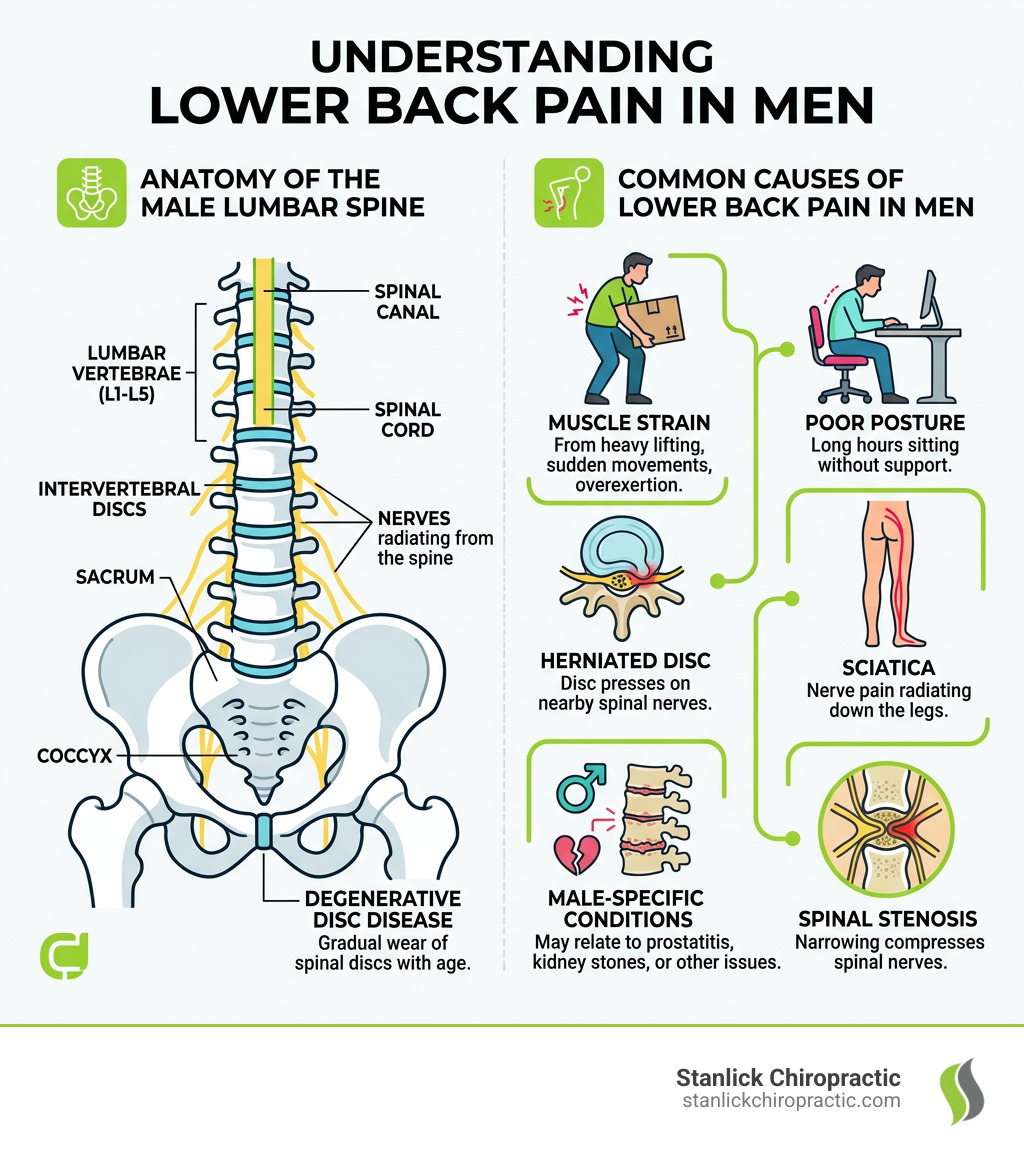
Lower back pain men experience ranks among the most widespread health complaints in the world. Here are the most common causes:
- Muscle strain – from heavy lifting, sudden movements, or overexertion
- Poor posture – especially from long hours sitting at a desk
- Herniated disc – when a spinal disc presses on nearby nerves
- Sciatica – nerve pain that radiates from the lower back into the legs
- Degenerative disc disease – gradual wear of the spinal discs with age
- Male-specific conditions – such as prostatitis, epididymitis, or kidney stones
- Spinal stenosis – narrowing of the spinal canal that compresses nerves
Back pain is the leading cause of disability worldwide and the most common reason men miss work. About 8 in 10 people will deal with it at some point in their lives — and men between the ages of 35 and 55 are especially at risk.
For most men, it starts small. A dull ache after a long day at the desk. Stiffness after a workout. Then it becomes harder to ignore.
What makes lower back pain tricky is that the cause isn’t always obvious. Sometimes it’s a simple muscle strain. Other times it points to something deeper — a nerve problem, a spinal condition, or even a male-specific health issue that has nothing to do with your back muscles at all.
I’m Dr. Mitch Stanlick, a chiropractor with over 20 years of experience helping men identify and treat lower back pain through evidence-based, non-invasive care. Before founding Stanlick Chiropractic, I worked as a personal trainer, which gives me a unique perspective on how movement, posture, and lifestyle all connect to back health in men.
Common Causes of Lower Back Pain in Men
When we talk about the lumbar spine, we are looking at a complex structure of five vertebrae, intervertebral discs, and a massive network of muscles and ligaments. Because this area supports the weight of your entire upper body, it is a prime target for injury and wear.

One of the most frequent culprits we see is muscle strain. This often happens when a man tries to “muscle through” a heavy lift or makes a sudden, twisting movement that the soft tissues aren’t prepared for. However, there are 5 common causes of back pain in men that go beyond simple strains:
- Herniated Discs: This occurs when the soft, jelly-like center of a spinal disc pushes through a tear in the tougher exterior. This can irritate nearby nerves, leading to pain, numbness, or weakness in an arm or leg.
- Sciatica: This is a specific type of nerve pain that travels along the large sciatic nerve, which runs from your lower back down through your hips and buttocks and down each leg. It usually only affects one side of your body.
- Degenerative Disc Disease: As we age, the discs between our vertebrae can lose their cushioning. This isn’t actually a “disease” but a natural part of aging that can cause significant discomfort for some men.
- Spondylolisthesis: This is when a vertebra slips forward over the one below it, often caused by a stress fracture or disc degeneration.
- Spinal Stenosis: A narrowing of the spaces within your spine, which can put pressure on the nerves that travel through the spine.
Understanding whether your pain is acute or chronic is the first step toward finding relief.
| Feature | Acute Lower Back Pain | Chronic Lower Back Pain |
|---|---|---|
| Duration | Lasts a few days to a few weeks | Lasts 12 weeks or longer |
| Common Cause | Sudden injury, lifting, or fall | Disc issues, arthritis, or lifestyle |
| Recovery | Usually resolves with self-care | Requires long-term management |
| Impact | Temporary disruption of activity | Can lead to long-term disability |
Mechanical Triggers for lower back pain men
In our Murfreesboro clinic, we find that daily habits are often the “sneaky” reasons why men hurt. Poor posture is a major factor. If you spend your day hunched over a steering wheel or a laptop, you are placing immense stress on your lumbar region. We often discuss the dangers of back pain from sitting all day, as prolonged sitting can lead to tight hip flexors and weakened glutes, both of which force the lower back to overcompensate.
Heavy lifting is another mechanical trigger, but it isn’t just about the weight; it’s about the technique. Repetitive motions—like those found in construction, warehouse work, or even high-intensity sports—can cause micro-traumas in the spine that eventually lead to a major “flare-up.”
Male-Specific Health Issues and lower back pain men
While most back pain is musculoskeletal, men have unique anatomical factors that can manifest as lower back discomfort. It is vital to recognize when the pain is “referred” from another organ.
Prostate health is a significant consideration. Prostatitis (inflammation of the prostate) can cause a dull, deep ache in the lower back or pelvic region. More seriously, prostate cancer can sometimes present as lower back pain, especially if it has begun to spread to the bones of the spine or pelvis.
Other male-specific triggers include:
- Epididymitis: This is an inflammation of the coiled tube at the back of the testicle. While the primary pain is in the scrotum, it can radiate into the groin and lower back. Statistics show this is most common in men aged 20 to 30.
- Testicular Cancer: Although rare, testicular cancer affects about 1 in 250 males and is the most common cancer in men ages 15–35. A dull ache in the lower back or abdomen is a known symptom.
- Post-Vasectomy Pain Syndrome: About 1 to 2 percent of men who undergo a vasectomy develop chronic pain, which can sometimes be felt in the lower back or pelvic area.
- Chronic Pelvic Pain Syndrome (CPPS): This condition involves long-term pain and urinary tract symptoms without evidence of a bacterial infection.
- Kidney Stones: While not exclusive to men, men are statistically more likely to develop them. The pain typically starts in the side or back and radiates to the lower abdomen and groin.
Red Flags: When Back Pain Indicates a Serious Condition
Most lower back pain men deal with will resolve with conservative care. However, certain “red flag” symptoms mean you should put down the heating pad and call a professional immediately.
One of the most serious conditions is Cauda Equina Syndrome. This happens when the nerve roots at the lower end of the spinal cord are compressed. It is a surgical emergency. You should know when to go to the emergency room if you experience:
- Sudden loss of bowel or bladder control (urinary incontinence or inability to go).
- “Saddle anesthesia”—numbness or tingling in the groin, buttocks, or inner thighs.
- Severe or progressive weakness in the legs that makes walking difficult.
Other warning signs that require a medical evaluation include unexplained weight loss (which could signal a tumor or infection), a high fever accompanying the pain, or pain that is significantly worse at night or when you are lying down. If you have a history of cancer and develop new, persistent back pain, it is always worth an immediate check-up to rule out metastasis.
Diagnosis and Non-Surgical Treatment Options
When you visit us at Stanlick Chiropractic in Murfreesboro, our first goal is to find the why behind your pain. We perform a thorough physical examination, checking your range of motion, nerve function, and muscle strength. We don’t just look at where it hurts; we look at how your whole body moves.
If you are looking for a chiropractor lower back pain murfreesboro tn residents trust, you’ll find that we offer several advanced, non-surgical options:
- Chiropractic Adjustments: We use precise movements to restore joint mobility and take pressure off irritated nerves.
- Spinal Decompression: This is a game-changer for men with herniated or bulging discs. By gently stretching the spine, we create negative pressure within the disc, encouraging it to retract and allowing healing nutrients to flow back in. You can learn more about how we use lumbar decompression to treat chronic conditions.
- K-Laser Therapy: This high-power laser therapy uses specific wavelengths of light to stimulate cellular healing, reduce inflammation, and decrease pain deep within the tissues.
- Over-the-Counter (OTC) Pain Relievers: While medications like ibuprofen or naproxen can help manage inflammation in the short term, we believe they should be a tool for recovery, not a long-term mask for the underlying problem.
Prevention and Lifestyle Habits for Long-Term Relief
Prevention is always better than a cure. For men, staying “back-healthy” involves a combination of strength, flexibility, and smart daily choices.
Weight management is crucial. Every extra pound you carry in your abdomen pulls your pelvis forward, straining the lower back muscles. Similarly, smoking cessation is vital for spinal health; smoking restricts blood flow to the spinal discs, causing them to degenerate faster.
Sleep also plays a major role. The best ways to sleep for back pain usually involve maintaining the natural curve of your spine. If you sleep on your back, try a pillow under your knees. If you’re a side sleeper, a pillow between your knees can keep your hips aligned.
Don’t forget stress management. When we are stressed, our bodies produce cortisol and our muscles—especially those in the neck and lower back—tend to tighten up. This chronic tension can lead to painful spasms.
Exercises to Prevent lower back pain men
Building a “functional” core is one of the best ways to protect your spine. This doesn’t mean doing a thousand crunches; it means training the deep muscles that stabilize your trunk. We recommend exploring 5 exercises to build a strong back to get started.
Stretching is equally important. Tight hamstrings and hip flexors are often the hidden culprits behind lumbar pain. We suggest trying these 9 stretches to relieve back pain, including:
- Pelvic Tilts: These help strengthen abdominal muscles and stretch the lower back.
- Bird-Dog: This improves core stability and balance while engaging the spinal extensors.
- Cat-Cow: A gentle way to improve mobility in the entire spine.
- Knee-to-Chest: Great for relieving pressure on the spinal nerves.
Frequently Asked Questions about Male Back Pain
Can prostate issues cause lower back pain?
Yes. Both benign conditions like prostatitis and more serious issues like prostate cancer can cause referred pain in the lower back. Prostatitis often feels like a deep ache or pressure in the pelvic floor that radiates to the lumbar region. In advanced cases of prostate cancer, the cancer cells can spread (metastasize) to the vertebrae, which causes persistent, deep bone pain. If your back pain is accompanied by difficulty urinating or blood in your urine, see a doctor immediately.
How long does it take for lower back pain to go away?
Most cases of acute lower back pain men experience will improve within 4 to 6 weeks with proper care and staying active. The old advice of “bed rest” is actually counterproductive; movement helps keep the joints lubricated and the muscles from seizing up. If the pain lasts longer than 12 weeks, it is considered chronic and may require a more structured management plan involving chiropractic care and physical therapy.
Is lower back pain a sign of testicular cancer?
It can be. While the most common sign of testicular cancer is a painless lump or swelling in a testicle, many men also report a feeling of heaviness in the scrotum or a dull ache in the lower abdomen or back. This happens because the nerves and lymph nodes associated with the testicles are located high in the abdominal area, near the kidneys.
Conclusion
Lower back pain is a common part of the male experience, but it doesn’t have to be a permanent one. Whether your pain is caused by a heavy lift at work, hours spent at a desk in Murfreesboro, or an underlying health issue, there is a path to recovery.
At Stanlick Chiropractic, we specialize in providing personalized, affordable care that gets to the root of the problem. We combine traditional chiropractic techniques with modern technology like spinal decompression and K-Laser therapy to help you get back to your life without surgery or heavy medications.
If you’re tired of living with discomfort and are looking for a chiropractor lower back pain murfreesboro tn can count on, we are here to help. Let’s work together to strengthen your back and improve your overall well-being. Reach out to us today to start your journey toward a pain-free life.